
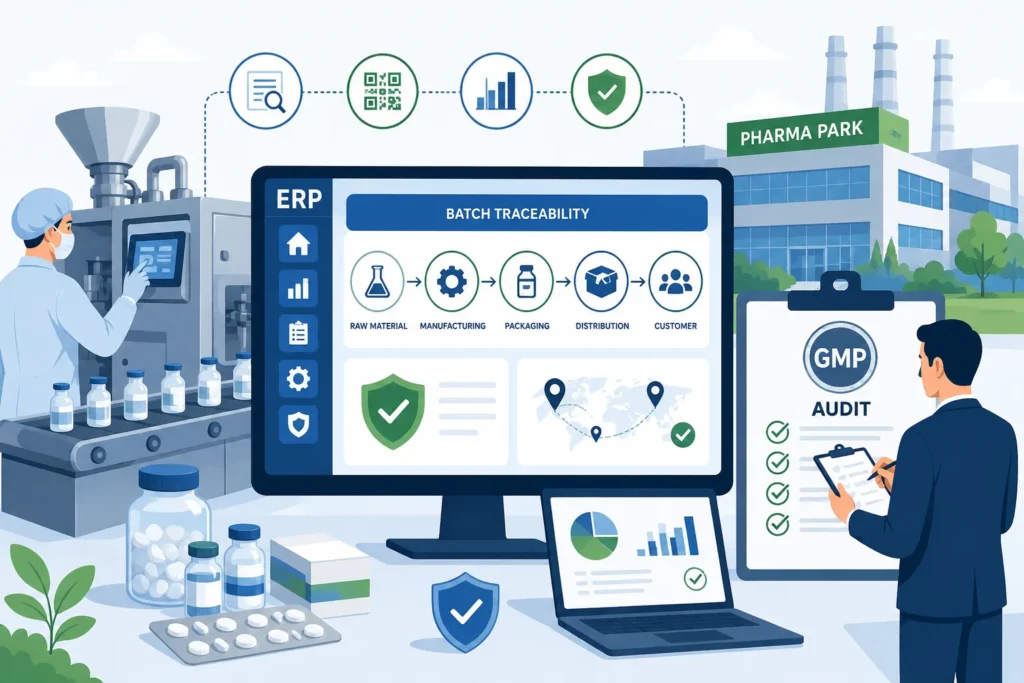
For pharmaceutical formulation and API manufacturers evaluating pharmaceutical erp software in pune, achieving automated compliance is your core competitive advantage. Deploying enterprise architecture within Bhosari’s industrial zones requires deep alignment between digital batch manufacturing records (eBMR), sub-second inventory expiration tracking, and USFDA 21 CFR Part 11 electronic signatures.
TL;DR / Key Takeaways
- Electronic Documentation over Paper: Manual batch logs fail regulatory checks; elite pharmaceutical platforms require continuous, auditable data loops.
- Granular Expiration Gatekeeping: First-Expiry, First-Out (FEFO) rules must run automatically inside your warehouse management layer.
- Native Audit Preparation: The platform must enable single-click electronic history tracking to handle unexpected regulatory site visits smoothly.
Technical Compliance Constraints in Bhosari’s Pharma Ecosystem
Pharmaceutical companies operating throughout the Bhosari industrial corridors work under precise manufacturing conditions where unmonitored ingredient deviations carry significant operational and legal penalties. In formulation labs, sterile processing centers, and API packaging plants, operational scale fractures generic inventory systems.
When searching for the right pharmaceutical erp software in pune, general distribution platforms fail because they lack the controls needed to police active chemical compositions. They record standard weight measurements, but leave out vital batch-specific indicators like material potency variations or environmental log histories.
To maintain perfect standing during thorough quality audits, your database must capture continuous, unalterable documentation. Your technical architecture must link individual material testing records directly to active batch logs. Without this direct verification link between raw ingredients and your finished shipments, passing international regulatory inspections becomes highly difficult.
Architectural Setup: Standard Manufacturing ERP vs. Validated Pharma ERP
| Compliance Variable | Standard Manufacturing ERP Systems (Generic Inventory Design) | Validated Pharmaceutical ERP (21 CFR Part 11 Compliant Architecture) |
| Electronic Records | Simple edit logs that users can override with standard admin credentials. | Cryptographically locked audit logs tracking every value alteration automatically. |
| Material Release Logic | Manual stock adjustments processed by warehouse supervisors. | Multi-tier laboratory approval locks keeping ingredients quarantined until cleared. |
| Batch Serialization | Standard parent-item product tracing across the basic warehouse floor. | Advanced forward and backward genealogical tracking across all production stages. |
| Formula Protection | Simple bill-of-material restrictions based on generic system accounts. | Electronic signature validation controlling accesses to active manufacturing profiles. |
Expert Insight: In the Bhosari manufacturing belt, many formulation agencies make the mistake of choosing a lower-cost accounting tool with simple batch add-ons, assuming it can pass strict oversight. When deploying this in practice, a common bottleneck is discovering the system cannot enforce dual-witness electronic sign-offs at the weighing station. If your platform allows a single technician to override a formulation variance without an independent quality approval, your batch records will fail standard regulatory reviews.
Technical Mapping of Formulation Workflows to Core Software Modules
Building complete information gain requires mapping exactly how material movements map to secure compliance steps inside the system database.
1. Automated Quarantine Gatekeeping and LIMS Syncing
The foundation of clean pharmaceutical tracking requires strict control over raw ingredients the moment they arrive. The software must place incoming raw materials into a secure quarantine state automatically. The platform must isolate these stocks until your lab software transmits a digital release certificate, ensuring unapproved materials never enter active compounding areas.
2. Electronic Batch Manufacturing Record (eBMR) Enforcement
For Bhosari plants operating high-output tableting or packaging lines, moving away from paper logs removes major human error risks. When launching this setup, your software engine must act as the primary gatekeeper for floor activities.
Every individual formulation step, weight verification, and temperature check must require unique electronic signature verification, saving data to your [Internal Link: Validated Batch Manufacturing Systems] to build unalterable compliance trails.
The 4-Stage Compliance Selection Sequence for Pharma Executives
Evaluating a dedicated pharmaceutical platform requires a testing methodology focused on software security and data control rather than basic user dashboards.
1.Test Dual-Witness Electronic Signature Protocols: Stage 1: Sign-off Security.
Do not review simple software screenshots. Provide your prospective vendor with an active compounding workflow scenario and attempt to alter an ingredient weight using a single account. Demand the platform block the action until a separate, authorized quality account applies a secure second validation.
2.Execute a Complete Forward and Backward Batch Recall: Stage 2: Traceability Test.
Provide a simulated raw material defect report for a specific chemical vendor. The software must scan your active channels instantly, tracing that exact raw ingredient lot across your entire storage floor, active production runs, and final distributed product packages in minutes.
3.Verify the Security of Formula Repositories: Stage 3: Vault Validation.
Review how the platform protects your core intellectual assets. The database must track every single change made to master formulation templates, logging the original metrics, the modified values, the executing user ID, and the formal justification record without exception.
4.Audit Integrated Tax and E-Invoice Gateways: Stage 4: Dispatch Uptime.
Confirm how the platform manages local shipping documentation. Ensure the system links directly with the National Informatics Centre (NIC) interfaces. If your dispatch team has to leave the system to manage tax invoices manually, shipping speed will bottle during critical period-end pushes.
Pro Tip: Always tie your final platform confirmation milestones to successful audit-log creation tests across your active production lines. Never settle for manual data logging workarounds during deployment, as floor personnel will bypass complex validation screens to save time during high-volume production windows.
Overcoming Regional Regulatory and Operational Bottlenecks in Pune
Scaling a pharmaceutical operation within Bhosari requires managing distinct domestic compliance challenges alongside standard international regulations.
Streamlining Local Vendor-Managed Material Tracking
Many active ingredients and excipients travel through local chemical suppliers before reaching your production lines. The enterprise engine must track these materials by batch number throughout transport. Additionally, when processing custom packaging designs through regional printing partners, the platform must track art approvals, monitor material weight sheets, and check batch labels to keep operations aligned with the newest [External Link: CDSCO Indian Regulatory Guidelines].
Implementing Strict FEFO Controls in the Warehouse
High-volume pharmaceutical operations demand precise warehouse floor management. Your software layout must employ strict First-Expiry, First-Out (FEFO) logic to control picking lists automatically. When an order populates, the system must guide pickers to the exact bin housing the oldest usable batch, keeping aging stocks moving cleanly and preventing inventory losses from product expirations.
True 5-Year Cost of Ownership (TCO) for Pharmaceutical Enterprises
Manage your implementation expenses effectively by reviewing how your system capital is distributed over a standard 5-year validated software lifecycle.
5-Year Validated Pharma ERP Lifecycle Capital Split
| Expense Classification | Allocation Share | Strategic Cost Control Method |
| Core Platform Configuration | 40% | Rely on built-in pharmaceutical modules to ensure standard system configurations don’t disrupt your long-term software upgrade pathways. |
| Validation Services | 25% | Hire certified validation engineers early to build documentation alongside deployment steps, saving time on late corrections. |
| Data Transformation | 15% | Clean your material registries, chemical specifications, and supplier profiles thoroughly before launching final data migration scripts. |
| Continuous Engineering Support | 20% | Develop internal systems leads within your quality, laboratory, and operations teams to resolve everyday user issues quickly. |
Ensuring Long-Term System Adoption Across Validated Floors
The primary point of failure for new software platforms within pharmaceutical facilities is user friction at the line level. Production operators, cleanroom technicians, and material handlers will look for workarounds if software screens require excessive manual data entry or disrupt active workflows.
To prevent data gaps, simplify data capture methods completely. Deploy sealed, washdown-rated touchscreen terminals and mobile barcode scanners directly within your cleanroom entry zones.
When a operator can confirm an assembly phase, log a batch code, or record environmental metrics with a few quick scans, input accuracy improves noticeably. This configuration keeps your teams focused on safe manufacturing while providing management with dependable compliance metrics.
Final Plan: Launching your Enterprise Software Transition
As you evaluate your choices for pharmaceutical erp software in pune to guide your organization forward, remember that technology simply acts as a mirror for your existing habits. Invest the effort to structure your inventory records, document your manufacturing processes, and clear your testing protocols before launching a system replacement.
When your real-world processes are well-organized, implementing a modern enterprise system gives your business the tools to scale safely.
Frequently Asked Questions
What is the expected implementation timeline for a validated pharmaceutical ERP?
For a mid-sized pharmaceutical formulation provider (employing 100 to 400 team members), a complete validated deployment typically requires 6 to 9 months. Launching modules in deliberate phases—prioritizing raw inventory control and quarantine rules before rolling out electronic batch manufacturing records (eBMR)—delivers the most dependable results.
How does the platform enforce USFDA 21 CFR Part 11 compliance regulations?
The software creates secure, unalterable background audit logs that track every system entry and value change automatically. Furthermore, it enforces clear role-based access rules and requires secure double-signature validation blocks for all critical manufacturing approvals and recipe alterations.
Can our laboratory testing equipment connect directly into the enterprise database?
Yes. Quality pharmaceutical applications provide robust integration hooks and open REST APIs designed to connect with modern laboratory analysis tools. This architecture imports compound test readings and quality data into the main database automatically, avoiding manual copy errors.
How does the system manage material inventory tracking across quarantine zones?
The software applies strict database flags to raw materials the moment they enter the warehouse gate. The system blocks these lots from appearing on active production picking lists until authorized quality management accounts complete verification checks and release the items manually within the application.